
Your credit score is one of the most important factors mortgage lenders look at when pre-qualifying or approving you for a home loan. In today’s lending market this is especially true. Gone are the days of “easy credit” and “easy home loans”. If you have a low credit score you may still be able to get a loan, but you’ll pay a higher interest rate and will probably need a larger down payment.
The first thing a lender will want to do when you begin conversation to inquire about a loan is to check your credit. This is the information they use to determine what sort of loan you will be best able to qualify for. If it is determined you have credit problems you may need to correct these problems to help raise your credit score before you can get a loan, or get a loan with the interest rates you want.
- How Credit Scores Affect Interest Rates
- What is a credit score or FICO score?
- What can I do to improve my Credit Score?
- What do I do if I find inaccurate information on my credit report?
How Credit Scores Affect Interest Rates
Below is an example from MyFico.com that shows how credit scores can affect your interest rate and the total cost of a loan.
|
Total Cost of Loan |
|||
|
$482,832.00 |
|||
|
$494,568.00 |
|||
|
$503,315.99 |
|||
|
$514,728.00 |
|||
|
$537,332.40 |
|||
|
$566,244.00 |
Over the span of a 30 year mortgage, a person will bad credit will pay $83,412 more than the person with excellent credit!
What is a credit score or FICO score?
A credit score is a number calculated based on a person’s credit history to give lenders an idea of credit worthiness. This score helps the lender identify the level of risk in lending money. The most commonly used scoring model is called a FICO score. It was developed by Fair Issac and Company and the three credit bureaus (Experian, Equifax and TransUnion) in the early 1980’s.
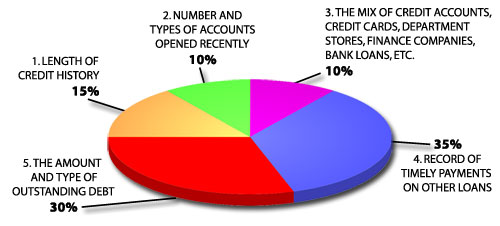
These are the major factors are used to calculate your FICO score:
- 35% percent of your credit score is based on your payment history. Late payments reported to the credit bureaus lower your score dramatically.
- 30% of your FICO score is related to your debt to credit ratio. It is calculated by comparing your amount of revolving debt, like credit card balances, to available revolving credit, such as your credit limit.
- 15% of your credit score originates from the length of your credit history.
- 10% is based on the kinds of credit you use. Some types of accounts are weighted more heavily.
- 10% of your FICO score is determined by how much credit you have used recently.
What can I do to improve my Credit Score?
Before you apply for a home loan, review your credit reports for problems that can affect your FICO score. Request a copy of your credit report from all three credit reporting agencies: Equifax, Experian, and Transunion.
You can get one free credit report a year for each bureau at annualcreditreport.com. If you need your report right away, you can order a “merged” report with credit score for about $29.95 from a variety of online resources. Check your reports for any inaccurate information that may lowering your credit score.
It is quite common for creditors to “forget” to close out paid accounts. Old mortgages or car loans that you have paid off but do not appear as “Closed and paid as agreed” can have a dramatic negative effect on your credit score.
Old bankruptcies and collections can be legally removed from your credit report after the statute of limitations for credit reporting has expired (the statute of limitations for Arizona is 3 years for credit card collections and 10 years for bankruptcy information). Read below to find out how to correct this information.
Don’t close out old and unused credit card accounts. By leaving them active, they improve the debt to credit ratio in your report. Creditors also look at the average age of your accounts so keeping old accounts open will help your score in this area too.
Additionally, you should avoid incurring some types of new debts (like car loans) right before you try to qualify for a home loan. These have a negative effect on your debt to credit ratio, lowering your credit score.
If possible, reduce your credit card balances to 75% or less of your available credit (25% is the optimal level).
Don’t apply for new credit cards or accounts for at least six months before applying for the loan. Each time you apply for credit, an inquiry from the creditor appears on your credit report. Too many inquiries can lower your score. With this in mind, be sure to decide on the loan broker you plan to use before you have your credit run when applying for a home loan. We suggest that buyers use a loan broker instead of going direct to a specific bank or mortgage firm, as a loan broker costs no more and can shop the market for you and only will run your credit one time.
What do I do if I find inaccurate information on my credit report?
If there are any errors or inaccurate information in your report, you should take steps to get it corrected immediately. Information which can be legally corrected or removed includes:
- Late payments when you weren’t late
- Loans or mortgages that were paid but never updated as paid.
- Bankruptcies over 10 years old can be removed.
- Most negative items over 7 years old can be removed.
Write a letter to the credit reporting agency asking that the error(s) be removed. They have 30 days to investigate, during which they contact the creditor and ask them to verify information in question. If they don’t verify or information, the credit bureau will remove the negative items from your credit file.
If you find that you have issues on your credit report that need work to get removed or cleaned up, your lender can recommend someone who can help tackle this task with you.